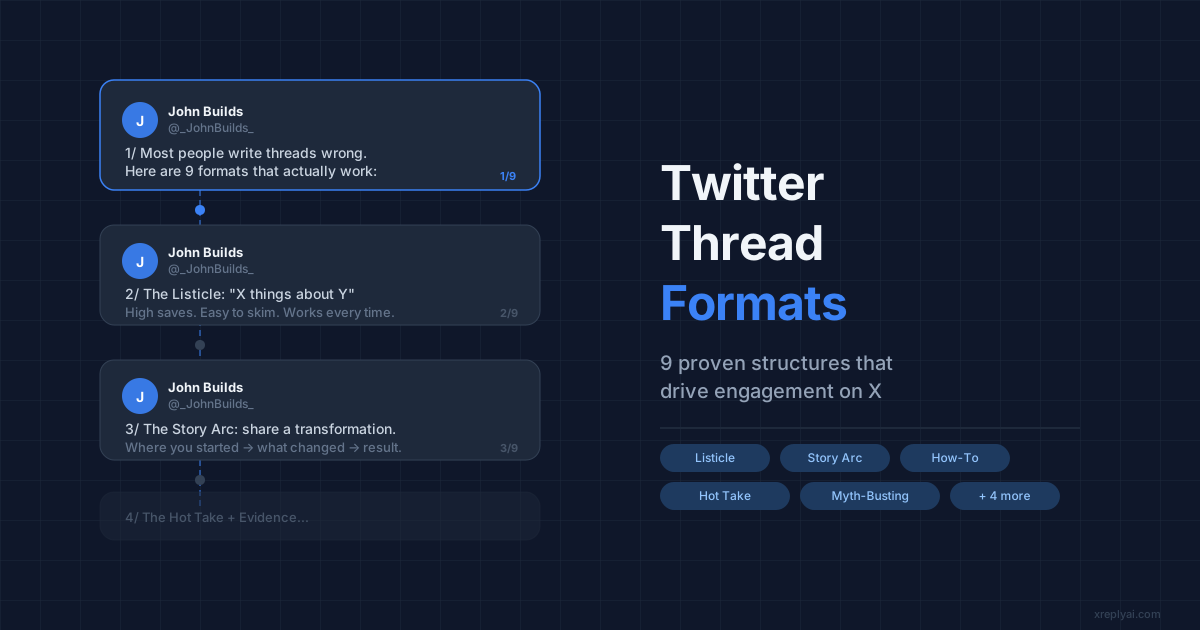
Twitter Thread Formats: 9 Proven Structures That Drive Engagement
Most threads flop not because the content is bad, but because the format is wrong. The structure of a thread — how you open, how you build, how you close — determines whether people read to the end or bounce after tweet one. Here are the 9 formats that consistently perform on X, with examples you can swipe.
Why threads outperform single tweets
The X algorithm rewards content that keeps people on the platform. Threads do exactly that. When someone opens your thread, they spend more time on X — and the algorithm notices. Three signals matter most:
- Dwell time: A 9-tweet thread holds attention 10x longer than a single post. Time spent is a direct ranking signal.
- Saves and bookmarks: Threads with dense, useful information get bookmarked at high rates. Saves signal high-value content to the algorithm.
- Reply chains: Each tweet in a thread is an opportunity for a reply, multiplying your engagement surface area without any extra reach cost.
The result: threads consistently reach 3-5x more accounts than equivalent single tweets on the same topic. But only if the format works. A badly structured thread gets abandoned after tweet two — and low completion rates actually hurt your reach.
The anatomy of a good thread
Every high-performing thread has the same three-part structure, regardless of format:
- The hook tweet (tweet 1): This is the only tweet that appears in feeds without people clicking in. It has one job: make them tap to read the rest. A weak hook kills a great thread.
- The body tweets (tweets 2–n-1): Deliver the value. Each tweet should be self-contained — readable on its own — while also pulling the reader forward to the next one. End each tweet mid-thought or with a micro-cliffhanger where possible.
- The CTA tweet (last tweet): Tell the reader what to do next. Follow, retweet, reply, or click a link. Do not end on a summary — end on a direction.
9 proven thread formats with examples
1. The Listicle Thread
Pattern: "X things about Y" or "X ways to Z." Each tweet covers one item in the list. The most reliable format on X — high saves, easy to skim, works for almost any topic.
1/ 7 things I wish I knew before growing to 10k followers on X:
2/ Consistency beats quality in the early days. Post every day for 30 days before optimizing anything. Most people quit in week two.
3/ Reply before you post. Spend 20 minutes replying to big accounts in your niche before you write your own content. It warms the algorithm to your account.
Best for: Tips, lessons, tools, mistakes, recommendations.
2. The Story Arc
Pattern: Where I was → what happened → where I am now. Personal transformation drives follows. People follow accounts they feel a connection to, and nothing builds connection faster than a real story.
1/ 18 months ago I was charging $50/hour for freelance work and barely covering rent.
2/ I had all the skills. I just had no leverage. I was trading time for money with no way to scale.
3/ The shift happened when I stopped selling hours and started selling outcomes. Here is exactly how I restructured my offers:
Best for: Building audience trust, positioning, personal brand threads.
3. The Hot Take + Evidence
Pattern: Make a controversial or counterintuitive claim in tweet 1, then spend the thread backing it up with data, examples, or logic. Drives replies and quote-tweets — both high-weight engagement signals.
1/ Posting daily on X is making you worse at X. Here is why:
2/ Volume without feedback loops produces more of the same. Most daily posters hit a plateau at 2k followers and stay there for years.
3/ The accounts that break through post less, analyze more. They track what hits, double down, and cut the rest. Quality compounds. Volume just fills space.
Best for: Building authority, sparking debate, high-reach distribution.
4. The How-To / Step-by-Step
Pattern: Teach a specific skill or process one step per tweet. The most bookmarked format. People save it to return to when they need the instructions.
1/ How to write a thread that actually gets read (step by step):
2/ Step 1: Write the last tweet first. Know exactly what action you want the reader to take before you write a single word of the body.
3/ Step 2: Write 10 hook options. Most people write one and go with it. The hook is 80% of your reach. Spend 80% of your time there.
Best for: Tutorials, processes, skill breakdowns, tool guides.
5. The Myth-Buster
Pattern: "Everyone thinks X. They are wrong." List the myths, debunk each one. Feels contrarian and drives shares from people who agree.
1/ 5 myths about growing on X that are keeping you stuck:
2/ Myth 1: You need to post 3x a day. Reality: most 100k+ accounts post once a day or less. Frequency is not the lever. Quality of distribution is.
3/ Myth 2: Hashtags help your reach. Reality: X has said hashtags have minimal effect on distribution. They just make your post look spammy.
Best for: Any niche with common misconceptions. Strong retweet bait.
6. The Contrarian Take
Pattern: Take a position that most people in your niche disagree with and defend it calmly and logically over several tweets. Highest reply rate of any format.
1/ Unpopular opinion: most solopreneurs should not be building in public.
2/ Building in public works when you have a large audience to build with. For most people with under 5k followers, it creates accountability theater — lots of updates, no real feedback.
3/ The alternative: build in private, launch publicly. Document the journey after you have results, not before. The story is better when you know how it ends.
Best for: Building a distinct point of view, driving discussion, growing a loyal audience.
7. The Resource Roundup
Pattern: "Best tools / reads / accounts for X." Pure curation. Extremely high save rate. Works because you are doing the research so your reader does not have to.
1/ 8 free tools that make X so much easier (save this):
2/ @TweetThreadGenerator — paste any long-form text and it splits it into a ready-to-post thread in seconds. Free, no login.
3/ Typefully — write and schedule threads without leaving your browser. The draft view shows exactly how each tweet will look.
Best for: Getting tagged and shared by the tools/people you mention. Build relationships while building reach.
8. The Case Study
Pattern: Take one real example — a product, campaign, person, or company — and break down what they did and why it worked. Specificity is the secret weapon here. Vague lessons get skipped; concrete numbers get shared.
1/ How one creator went from 0 to 50k followers in 6 months with a single strategy. Here is the breakdown:
2/ He picked one big account in his niche and replied to every tweet they posted for 90 days. Not generic replies — specific, additive ones that made the original tweet better.
3/ Result: the big account followed him back in week 4. Mentioned him in a thread in week 7. That mention was seen by 200k people and drove 3,000 follows in 24 hours.
Best for: Building credibility, proving your point with evidence, drives saves.
9. The Question + Answer
Pattern: Pose a question your audience is thinking about in tweet 1, then answer it across the thread. Feels conversational. Strong reply rate because the question primes people to engage.
1/ What actually makes someone's writing voice sound distinct on X? I have been thinking about this for a while. Here is what I found:
2/ It is not vocabulary. Smart-sounding words are everywhere. The writers who stand out use short, declarative sentences. They do not hide behind complexity.
3/ It is specificity. Not "I worked hard." But "I sent 200 cold emails in 14 days." Specific numbers and details are what stick in memory.
Best for: Thought leadership, niche topics, generating replies and discussion.
Hook tweet tips
The hook is the only tweet that appears in feeds. Everything else is hidden behind a click. These patterns consistently drive click-throughs:
- Lead with the outcome: Tell them exactly what they will know by the end. "By the end of this thread you will know how to X" works because it makes a specific promise.
- Use a surprising number: "I analyzed 500 threads. Here is what separated the top 1% from the rest." Numbers signal specificity and signal that you did the work.
- Make it feel urgent or exclusive: "Most people will never learn this." Or "This works in 2026 — most advice online is 3 years out of date."
- Never start with "I" or "A thread about": These signal low-effort and get scrolled past. Make the first word do work.
- Test multiple hooks: Write 5-10 options. The one that feels obvious is rarely the best one. The best hooks are usually the ones that feel slightly too bold.
CTA tweet tips
Most threads end with a whimper — a summary that nobody needed. The final tweet is valuable real estate. Use it:
- Ask a specific question: "Which format are you going to try first? Reply below." Drives replies. Replies boost reach.
- Ask for a retweet if useful: "If this was useful, repost so others can see it." Simple and effective — most people just forget to ask.
- Offer something in exchange for a reply: "Reply with your niche and I will suggest which format to try first." Drives high-quality replies and signals community to the algorithm.
- Link to a resource: Send them somewhere useful. A tool, a post, a free guide. The link should feel like a natural next step, not an ad.
Free thread generator tool
Once you have written your thread content, you need to split it into tweet-sized pieces. Our free tweet thread generator does this automatically.
Paste your long-form text, choose a numbering style (none, (1/n) at the end, or n/ at the start), and the tool splits it into tweet-sized chunks — always under 280 characters. Every tweet gets a copy button. There is a "Copy all" button to grab the full thread at once.
No login, no AI, no data sent to any server. Everything runs in your browser.
Ready to format your thread?
Paste your content and get a ready-to-post thread in seconds.
Open the free thread generator →For the reply side of X — responding to threads in your own voice at scale — XreplyAI analyzes your existing tweets to build a voice profile and generates replies that sound like you.
FAQ
- What is the best format for a Twitter thread?
- The best format depends on your goal. Listicle threads drive saves, story arc threads drive follows, and hot take threads drive retweets and replies. Start with a strong hook tweet, deliver value in the body, and end with a CTA.
- How long should a Twitter thread be?
- Most high-performing threads are 5-10 tweets. Shorter threads (3-5) work for hot takes and quick tips. Longer threads (10+) work for deep how-tos and case studies, but every tweet must earn its place.
- How do I write a good hook tweet for a thread?
- Your hook tweet determines whether anyone reads the rest. Lead with a bold claim, a surprising number, or a relatable pain point. Avoid starting with "I" or "A thread about." Make the reader feel they will miss out if they scroll past.
- What should the last tweet in a thread say?
- The final tweet should include a clear call to action — follow for more, retweet if useful, reply with a question, or link to a resource. Do not just summarize; give the reader a next step.
- Is there a free tool to create Twitter threads?
- Yes. Our free tweet thread generator at xreplyai.com/tools/tweet-thread-generator splits your text into a numbered thread automatically. Paste your content, choose a numbering style, and copy each tweet. No login required.
Post consistently without living on X
XreplyAI generates threads and replies in your voice so you can show up daily without spending your morning drafting. Free trial, cancel anytime.
Try XreplyAI free →