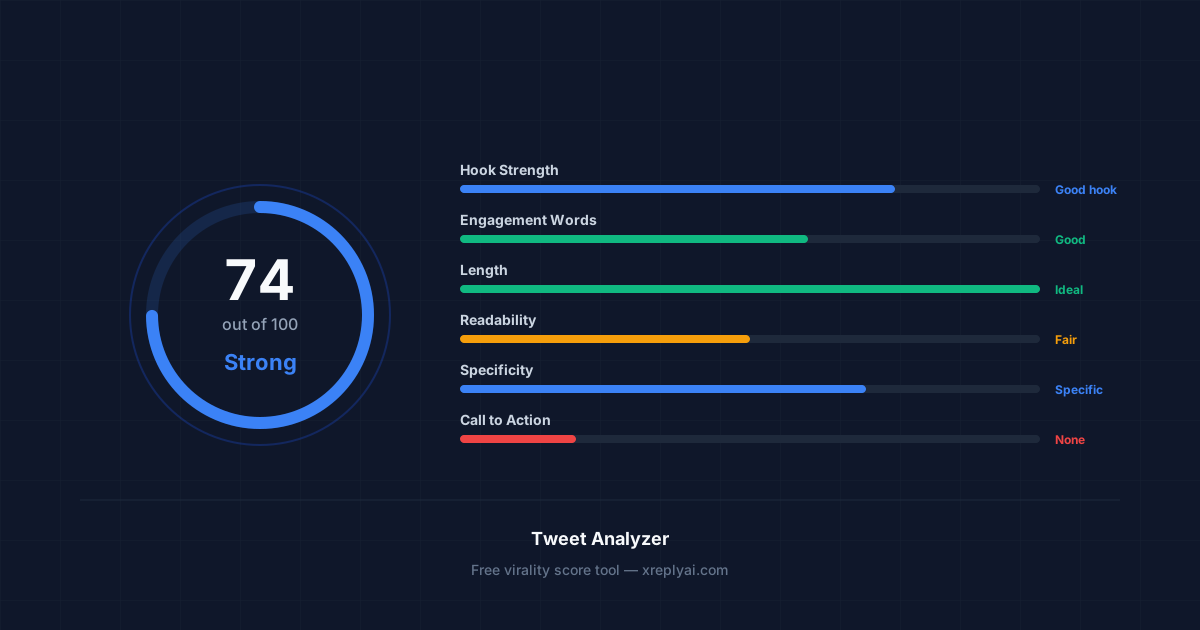
Tweet Analyzer: How to Score Your Tweet's Virality Before You Post
Most tweets get ignored — not because the idea is bad, but because the execution is. A weak hook, no CTA, vague claims. The good news: virality is more formula than luck. Here are the six signals our Tweet Analyzer measures, and how to improve each one.
Try it now — free
Paste any tweet and get your virality score in seconds.
1. Hook Strength (25 points)
Your hook is the first line. It's the only line most people see before they decide to scroll past or keep reading. On X, you have roughly half a second to earn attention.
The highest-scoring hooks follow one of these patterns:
- Number opener: "5 mistakes that cost me $40k in my first year"
- How/Why/What: "Why most Twitter growth advice is wrong"
- Thread signal: "Thread: everything I learned building to 50k followers"
- Bold claim: "Unpopular opinion: consistency is overrated"
- Curiosity gap: "Nobody talks about this Twitter growth hack"
A hook that starts with a vague statement like "I've been thinking a lot lately" scores 0. A hook starting with "3 years ago I quit my job." scores high because it signals a story and a payoff.
2. Engagement Words (20 points)
Certain words trigger an emotional response that makes people stop, react, or reply. These aren't clickbait — they're words that signal something worth paying attention to.
High-value engagement words include:
Used naturally, one or two high-value words can lift engagement significantly. Overuse makes tweets feel like spam. The analyzer rewards 1–3 well-placed engagement words.
3. Optimal Length (20 points)
Length matters more than most creators think. Research from multiple sources consistently shows the 70–220 character range drives the highest engagement rates on X.
The 70–140 range works because it's long enough to deliver value but short enough to read in one glance. If your tweet needs more than 220 characters, consider whether it should be a thread instead.
4. Readability (15 points)
X is a visual feed. A wall of text gets skipped even if the idea is good. Readability comes down to three things:
- Line breaks — breaking your tweet across multiple lines increases read-through rates
- Short sentences — avg 8–12 words per line is the sweet spot
- Appropriate caps — ALL CAPS reads as shouting and hurts credibility
Compare these two versions of the same tweet:
Low readability
I spent 2 years building an audience and the single biggest mistake I made was not engaging with replies because I thought the algorithm only rewarded original content but it turns out replies drive 27x more algorithmic reach.
High readability
2 years of audience building.
My biggest mistake: ignoring replies.
Replies drive 27x more algorithmic reach than likes.
I wasted a year not knowing this.
5. Specificity (10 points)
Vague tweets get vague results. Specificity builds credibility and makes claims believable. The analyzer looks for:
- Numbers and statistics ("47%", "3x", "in 90 days")
- Currency figures ("$12k/month", "€500")
- Timeframes ("in 6 months", "last Tuesday")
- Named entities (people, tools, places)
Vague (scores low)
"I made a lot of money from a newsletter last year."
Specific (scores high)
"I made $23,400 from a 400-subscriber newsletter in Q3 2025."
6. Call to Action (10 points)
The X algorithm rewards engagement — and replies carry more weight than likes or retweets. A strong CTA is the simplest way to generate replies and boost algorithmic reach.
Strong CTAs that score full points:
- "Reply below with your take"
- "What do you think? Let me know."
- "Agree or disagree?"
- "Tag someone who needs to see this"
- "Drop a ❤️ if you agree"
Even ending with a question ("thoughts?") earns partial points. No CTA at all leaves points — and engagement — on the table.
What your score means
80–100 points
Strong hook, good specificity, clear engagement signals. High viral potential.
60–79 points
Solid tweet with good engagement potential. A few tweaks could push it higher.
35–59 points
Needs a stronger hook or more specific claims to stand out.
0–34 points
Unlikely to get traction. Focus on hook and CTA first.
FAQ
What makes a tweet go viral?
Viral tweets typically have a strong hook in the first line, use high-engagement words (like "secret", "mistake", or "brutal truth"), fall in the 70–220 character range, include specific numbers or stats, and end with a clear call to action. No single factor guarantees virality, but scoring high across all six dimensions dramatically improves your odds.
How does the Tweet Analyzer score tweets?
The Tweet Analyzer scores tweets across six dimensions: hook strength (25 pts), engagement words (20 pts), length (20 pts), readability (15 pts), specificity (10 pts), and call to action (10 pts). Each category is scored independently and scaled to a 0–100 total virality score.
What is the ideal tweet length for engagement?
Research consistently shows the 70–220 character range drives the highest engagement on X. Tweets under 30 characters lack substance; tweets over 220 chars see declining attention. The sweet spot for maximum engagement is 70–140 characters.
What is a good virality score?
Scores 80–100 are rated "Viral" and have strong engagement potential. 60–79 is "Strong" — solid with room to improve. 35–59 is "Average" — needs a better hook or CTA. Below 35 is "Weak" — focus on the hook and specificity first.
Can a tweet score low and still go viral?
Yes. The analyzer scores based on structural signals, not topic relevance or timing. A perfectly-timed tweet about breaking news can go viral with a weak hook. But over hundreds of tweets, higher scores correlate with higher engagement.
How many engagement words is too many?
Two to three well-placed power words is the sweet spot. More than four starts to feel like clickbait, which can actually hurt engagement as followers learn to distrust the pattern.
Should I always end with a question?
Not always — but it helps. Tweets that invite a reply get a direct algorithmic boost because replies signal high engagement quality. Even a soft question ("thoughts?") earns partial credit.
Turn high-scoring tweets into a daily habit
XreplyAI generates posts and replies in your voice so every tweet sounds earned, not templated. Free trial, cancel anytime.
Try XreplyAI free →