Twitter Pinned Tweet Strategy: Grow Faster in 2026
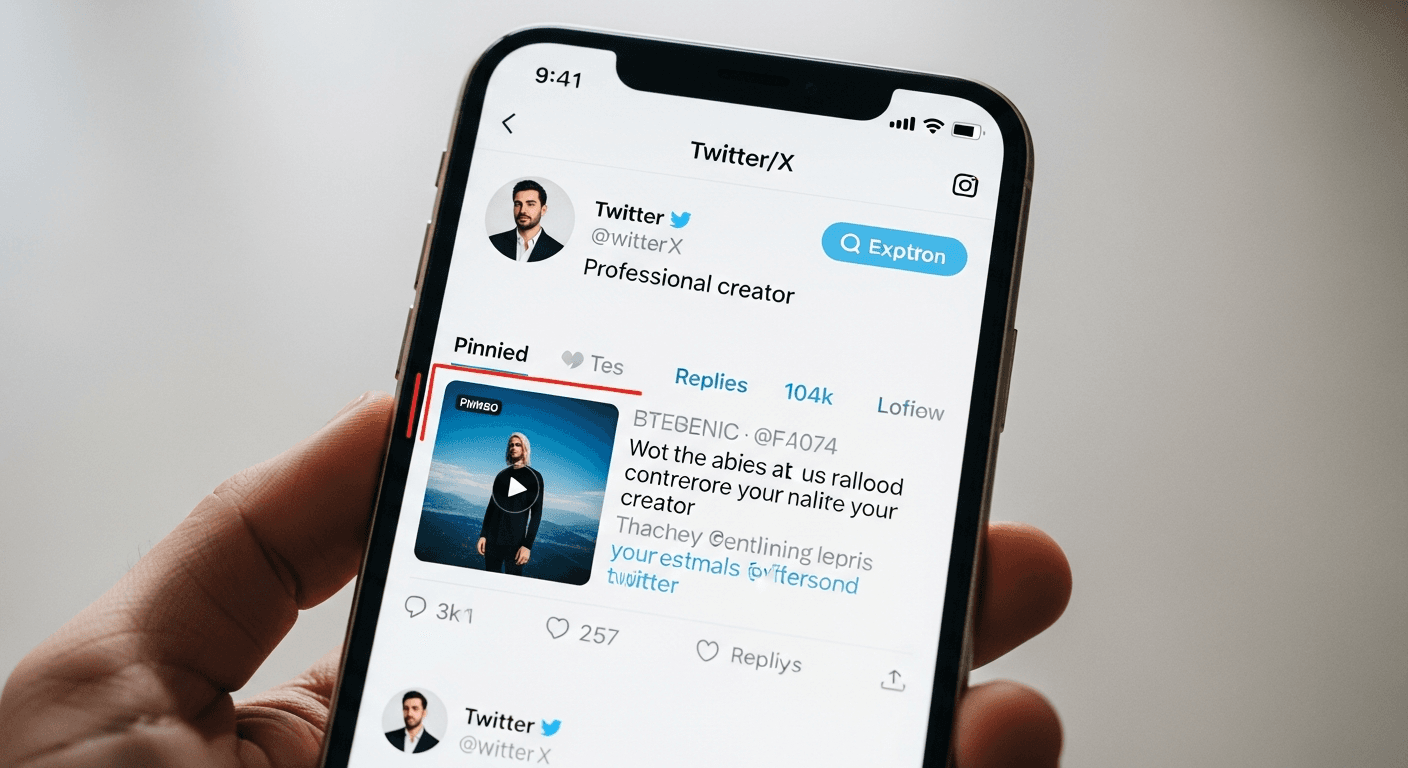
Every time someone discovers you on X, they do the same thing: tap your profile, skim your bio, and then look at your pinned tweet. That first post is your handshake. It tells a new visitor whether you are worth following, worth trusting, or worth buying from. Most people waste it.
The default mistake is leaving an old viral tweet pinned because it got a lot of likes. Vanity metrics are not conversions. A post that went viral six months ago about a niche meme does nothing to turn a cold profile visitor into a follower who actually cares about your work. Your Twitter pinned tweet strategy needs to be intentional.
This guide covers what the highest-converting pinned tweets actually look like in 2026, four specific formats you can use, and how to think about your pinned tweet as part of your broader X growth engine.
Why Your Pinned Tweet Is Your Most Valuable Post
Think about where pinned tweets appear: right at the top of your profile, above every other post you have ever written. It is the first piece of content that a profile visitor sees after your bio. On mobile, it takes up the entire screen before the user scrolls. That positioning is worth more than any algorithmic boost, which is why your Twitter pinned tweet strategy deserves real thought.
There are two categories of people who land on your profile. First, someone who just saw a reply you left on another account's thread. They are curious, not yet sold. Second, someone who found you through search or a mutual follow. They are cold. Either way, they are making a fast judgment call about whether to follow you.
The Twitter pinned tweet has one job: give that person a clear reason to stay. It should answer three questions in under ten seconds: Who are you? What do you offer? What should I do next?
Most pinned tweets answer zero of those questions. They are old threads that performed well, screenshots of compliments, or welcome tweets that say something vague like “Thanks for visiting my profile.” None of that converts. A pinned tweet that does not convert is dead weight at the top of your profile.
When you are running a reply guy strategy to grow on X, the math is straightforward: you are driving strangers to your profile every time you reply to a high-visibility account. Your Twitter pinned tweet is what those strangers see first. A weak pin wastes every reply you write.
The 4 Highest-Converting Pinned Tweet Formats
There is no single universal pinned tweet. The right format depends on your goal: grow your audience, build email subscribers, close customers, or establish credibility. Here are the four formats that consistently outperform everything else.
Format 1: The "What I Do" Thread
This is the best all-around format for anyone who is still building an audience. It is a short thread (5-8 posts) that explains who you are, what you have built or learned, and how you can help the reader. The first post acts as a hook with a clear value statement. Example first post: “I grew my X account from 0 to 15k followers while running a solo SaaS. Here is everything I did, in order: [thread]”. Link the thread from the pinned post. Visitors click through, get value, and follow before they finish reading.
Format 2: The Free Resource Pin
If you have built something useful, a free tool, a template, a checklist, lead this with it. The format is: problem statement in line one, what the resource solves in line two, link in line three. This format works well for email list growth and drives external traffic from your profile. Pair it with a tweet thread generator to turn the resource into a thread version that lives separately from the pin.
Format 3: The Milestone Social Proof Pin
Numbers change behavior. A pinned tweet that leads with a specific, credible result pulls curiosity from cold visitors. Example: “12 months ago I had 200 followers and no product. Today: 18k followers, $8k MRR. Here is the exact playbook.” The credibility is in the specificity. Round numbers are ignored. Specific numbers are believed. Follow the milestone with a thread or link that actually delivers the playbook, not a vague teaser.
Format 4: The Product CTA Pin
For founders with a live product, this is the format that drives the most direct revenue from profile traffic. Keep it short: one line of social proof (users, revenue, or a strong quote), one line on what the product does, and one link. Do not bury the CTA. The mistake most founders make is writing a long pitch and hiding the link at the bottom. Lead with the result, follow with the proof, end with the link.
What Makes a Pinned Tweet Actually Convert
Across all four formats, the highest-converting Twitter pinned tweets share a set of structural elements. Getting these right matters more than the exact wording.
A specific value offer in the first line. The algorithm does not show a preview of the second line on mobile until the user taps. The first line is the hook. If the first line is not interesting, nothing else matters. Avoid starting with your name, a question, or a vague claim. Start with a number, a result, or a direct statement of what the reader gets.
Social proof, not self-promotion. There is a difference between “I built X” and “12,000 people use X.” The second version is harder to ignore. Even modest proof works: a testimonial quote, a specific follower count, a revenue number, or a press mention. If you are early and have no proof yet, the “What I Do” thread format is your best bet until proof accumulates.
One clear call to action. The most common mistake is ending with no direction. “Follow me for more” is weak. Tell the visitor exactly what to do: follow the thread, click the link, reply to this post. One action per pin. Two actions create decision paralysis and lower conversion on both.
No em dashes, no jargon, no corporate voice. Twitter pinned tweets that read like press releases get scrolled past. Write like you talk. Short sentences. Active verbs. The goal is to feel like a real person saying something worth reading, not a brand talking at an audience.
You can use a tweet analyzer to study which of your past posts drove the most profile clicks. That data tells you which voice and format your audience already responds to, which is the fastest way to pick the right format for your pin.
X Pinned Post Strategy: Timing and Rotation
Your Twitter pinned tweet is not a set-and-forget decision. Rotating it strategically is part of a mature X pinned post strategy. Here is how to think about the lifecycle.
Pin for 30-90 days at minimum. Most profile visitors are new, so they will not have seen your previous pin. Rotating too quickly means constantly resetting the data you need to judge what is working. Give each Twitter pinned tweet enough time to see real volume, then evaluate conversion signals: follower growth rate, link clicks if you are using a trackable URL, and DM inquiries that reference the pin.
Match your pin to your current goal. If you are launching a product, switch to the Product CTA format for the launch window. If you are building an email list, switch to the Free Resource format. Your pinned tweet should reflect where your business is right now, not where it was six months ago when you wrote a thread that happened to go viral.
Update after a major content win. When you publish a thread that outperforms everything else, pin it immediately while it has momentum. A thread that is getting shares and profile visits will compound faster when new visitors land on a pinned preview of that same thread. That is a short-term pin, two to four weeks, then rotate back to a longer-term conversion format.
Knowing the best time to post on X also informs your pin rotation cadence. If your audience is most active on certain days, that is when to make the switch so the new Twitter pinned tweet benefits from fresh profile traffic at peak hours.
Best Pinned Tweet Examples: What Good Looks Like
Seeing the formats in practice makes the difference between understanding them and actually using them. Here are five Twitter pinned tweet examples that follow all the rules above. These are templates, not scripts. Replace the specifics with your own numbers and context.
Example 1 (What I Do thread hook): “I bootstrapped a tool to $5k MRR in 90 days while working a day job. Here is every growth tactic I used, from 0 to today:” followed by a thread link. Works because: specific number, specific timeframe, promise of actionable content.
Example 2 (Free Resource pin): “I spent 3 years studying what makes X accounts grow. I turned it into a free 47-point checklist. Drop your email and I will send it:” followed by a link. Works because: time investment creates value perception, specific number (47 points), clear next action.
Example 3 (Milestone social proof): “One year ago: 0 followers, 0 revenue, no product. Today: 22k followers, $11k MRR, 1,400 customers. The gap was one habit. Thread:” followed by a thread link. Works because: before/after contrast, specific numbers, curiosity gap (what was the one habit?).
Example 4 (Product CTA): “4,200 founders use [product] to grow on X without spending hours a day on replies. 14-day free trial, no card needed:” followed by a product link. Works because: social proof first, product benefit second, low-friction CTA third.
Example 5 (Personal authority): “I write about building in public, growing on X, and making money as a solo founder. If any of that is you, follow along. Thread of my best posts from this year:” followed by a thread link. Works because: clear audience filter, no pretense, invites the right people and self-selects out the wrong ones.
For generating the thread content that backs up these best pinned tweet examples, a good tweet thread generator turns your raw ideas into structured threads worth pinning.
Connecting Your Pin to Your Reply Strategy
The Twitter pinned tweet does not operate in isolation. On X in 2026, the most effective growth loop for creators and founders is: write smart replies on high-traffic accounts, drive curious visitors to your profile, convert them with your pinned tweet. If any step in that loop is weak, the whole system leaks.
Most people optimize their replies and completely neglect their profile. They get the click-through from a great reply, and then the visitor lands on a profile with no pin, or a Twitter pinned tweet from 18 months ago about something unrelated to the topic that sent them there in the first place. That is a conversion failure at the last step.
The fix is to think about your pinned tweet and your replies as a pair. If you are replying mostly in the SaaS founder niche, your Twitter pinned tweet strategy should speak directly to that audience. If you shift your reply focus to a different community, update your pin to match. The visitor who clicks through from your reply is already pre-qualified, your pin just needs to close the loop.
XreplyAI handles the reply side of this equation. It generates replies in your voice, trained on your own posts, so your replies sound like you rather than a template. But the best reply strategy in the world still needs a pin that converts. Use XreplyAI to stay consistent on replies, and use this guide to make sure your Twitter pinned tweet does the converting work when visitors arrive.
For a deeper look at the reply side of the growth loop, the reply guy strategy guide covers the full approach, including which accounts to target, reply cadence, and how to avoid common mistakes that get accounts muted.
Your pinned tweet is not a trophy case for old viral posts. It is the most visible conversion surface on your entire profile, and most creators leave it doing nothing. Pick one of the four formats above, write it this week, and rotate it to match your current goal every 30 to 90 days. The compounding effect of a strong pin working alongside a consistent reply strategy is one of the most underrated growth levers on X.
If you are serious about growing on X without spending hours a day manually crafting replies, try XreplyAI free. It handles the reply engine in your voice so you can focus on the strategy: the right pin, the right content, the right audience.
FAQ
- How often should I change my pinned tweet on X?
- Every 30 to 90 days is a reasonable cycle for most accounts. Rotate sooner if you have a time-sensitive launch or a thread that is currently getting strong organic reach. Do not rotate more than once per month without a clear reason, because you lose the data signal needed to judge whether the current pin is converting.
- What should I pin on Twitter if I do not have social proof yet?
- Use the "What I Do" thread format. This format does not require an audience or revenue numbers. It just requires that you can explain who you are and what you are building in a clear, specific way. A well-written thread that delivers genuine value will convert better than a social proof pin with weak numbers.
- Should my pinned tweet be a thread or a single post?
- For most growth goals, a thread works better because it gives more room to deliver value and keep the visitor engaged. A single post works well for direct product CTAs where you want a fast, frictionless click to a link. Match the format to the goal: threads for credibility and audience growth, single posts for direct conversion.
- Does the X algorithm boost pinned tweets?
- No. Pinned tweets are not given algorithmic distribution. Their value is entirely in the profile visit experience. They are seen by people who already found you, not by people scrolling their feed. That is why optimizing for conversion rather than engagement metrics is the right frame for your Twitter pinned tweet strategy.
- Can I use my pinned tweet to grow my email list?
- Yes, and for many creators it is one of the highest-ROI moves available. Pin a post that leads with a specific free resource, add a link to a landing page or a newsletter sign-up, and make the CTA explicit. Accounts that do this consistently report email conversion rates from profile visits that are significantly higher than social follows alone.